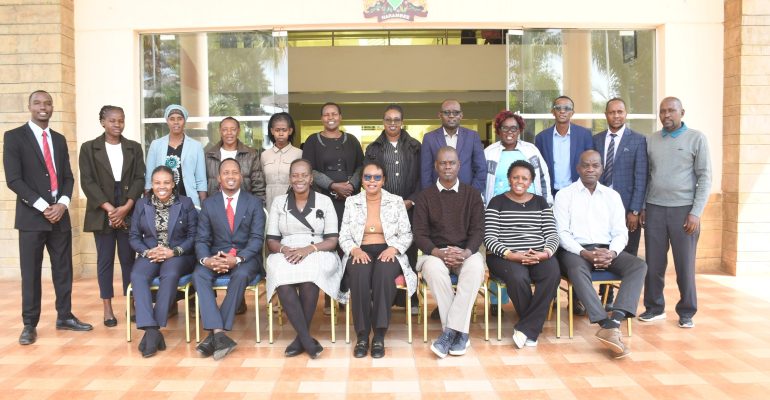
During a Gender Mainstreaming in Development training, organized by the Institute for Gender and Social Development, officers from Samburu, Kisumu and Nyandarua county governments came together under different contexts with regards to gender issues:
From Samburu came officers working in a landscape of pastoralist homesteads, where a girl’s path is often decided long before she is asked what she wants from it. From Kisumu came colleagues from the busy lakeside corridor of trade and fisheries, where gender gaps show up in who owns the boat and who is left holding the household when it collapses. From Nyandarua were officers rooted in the highland farms, where land and inheritance still tell an old story about whose name goes on the title deed.
Underneath the syllabus was a familiar national question: how does Kenya’s constitutional promise of equity, the two-thirds gender rule, the Sexual Offences Act, CEDAW, the Beijing Platform for Action translate from paper into an actual budget line, project design, or response to violence back home?
Devolution was meant to close that gap, yet participants openly named it as the reason they had come: to learn how to mainstream gender in county projects, secure fair access to resources in the budgeting process, prevent and mitigate GBV locally, deepen their own understanding of gender issues, and fold their communities’ diverse needs into county policy.
How were they going to do this? Naming the System, From Law into Practice, Budgets, Voices and Evidence and Implementation- Back to the County
In a nutshell, the training began with definitions, distinction between sex and gender, and the often invisible process by which a society decides which tasks and decisions belong to men and which to women. Case studies on culture and patriarchy gave the discussion teeth.
Then; Legal and policy frameworks that underpin gender inclusivity into practice how to embed a gender lens across the entire project cycle, and how to build inclusive workplace cultures through fair policy and institutional planning.
Perhaps the most quietly transformative session was on Gender Responsive Budgeting: the recognition that a budget is never neutral, and that every allocation, a borehole sited far from where women collect water, a market shelter with no thought for traders with disabilities, implicitly favors some groups over others.
Action planning, illustrated commitment to concrete steps- a policy to revise, a budget line to review, a dialogue to convene. In many ways, the three counties rehearsed Kenya’s larger gender mainstreaming journey in miniature: good laws meeting difficult cultures, budgets meeting real communities, policy meeting practice.